
Perdida de un Ser Querido

Family Loss
This collection is aimed at anyone who has lost a sibling, parent, or spouse. These titles are either in Spanish, bilingual books, or books by Latino authors. Offering advice, comfort, or first hand accounts of grief. Made up mostly of memoirs and first hand accounts, but include fiction novels as well. These titles are recommended for older teens and adults.
Esta colección está dirigida a cualquier persona que haya perdido a un hermano, a un padre o a un cónyuge. Estos títulos están escritos en español, son bilingües o han sido escritos por autores latinos. Ofrecen consejos, consuelo o relatos de primera mano sobre el duelo. Se compone principalmente de biografías y testimonios personales, aunque también incluye novelas de ficción. Estos títulos se recomiendan para adolescentes mayores y adultos.
Burn Me Back
Robles-Alvarado, Peggy
Description:
English: “My Spanglish,” Peggy Robles-Alvarado declares, “drops the -s and makes it ma’ o meno’,” replaces accent marks with side-eye, “has a Tía sin papeles,” and recognizes that “there is no other way to say— / Cónchole papi, you look good!” Igniting across tongues, cultures, and countries, the incendiary poems in Burn Me Back harness the incantatory power of language through hybrid forms, preserving a beloved father’s memory, enshrining the legacy of the Latino immigrant community in Washington Heights and the Bronx, reimagining the world we share, and speaking toward a hopeful multiplicity of possible futures. At the cross section of Puerto Rican and Dominican diasporas, rooted in ancestral narratives and infused with generational dislocation, this speaker refuses to abandon what resists translation, makes the space she needs, and transforms objects as she names them: “My Spanglish knows a fire escape is also a terrace.” Yes, the language here is a feat of engineering — a design shaped by the conditions of emergency, an architecture of survival, deliverance to open air. Like isolating the notes in a thunderous chord, Robles-Alvarado dexterously teases out each word’s many meanings, listening for the individual strains that created her as she archives family lore and fleshes out her personal history, writing against patriarchy while codifying working-class wisdom. She reconstructs a whole genealogy in “What They Mean by Papers,” reciting a negative litany of “papeles.” “Not the Daily News or El Diario La Prensa, / or the kind my mother read to me on Sunday / mornings,” her “throat full of / pelitos de mango,” “Not the kind Tía Weltina used to roll her tobacco with,” “conjuring / Taíno spirits she exhaled … as she tried to memorize the national anthem,” but the kind “Uncle Rito forged” while he “learned to curl the R in his name / as if writing sacred geometry,” “the kind that convinced four of my aunts to marry older / naturalized men in exchange for an acre of my grandfather’s campo” — the kind that required the rest of their lives as payment, “their bodies, / all their milk and honey, all their amber and caña dulce / sacrificed to the lust of viejos verdes, old bastards / who soured early on too much tabaco y ron and wanted to plant / their moldy seeds in supple girls who had never seen snow.” Robles-Alvarado orchestrates the fullness of her song by refusing to leave anyone out, by making room for a term’s contradictory definitions and playing through discordant combinations until the dissonance resolves. What began as an elegy composed by a daughter lost in mourning becomes an expansive arrangement sounding rupture and repair. This music travels between loss and recovery, addiction and sobriety, the cooling embers of lost childhood and the heat of the present, this very moment in which you could reach out to the people around you and ask them to be here with you for every scalding second, the warmth of your skin against theirs posing a burning question — an invitation to burn you back.
Español: «Mi Spanglish —declara Peggy Robles-Alvarado— se come las eses y lo convierte en "ma’ o meno’"», sustituye los acentos gráficos por una mirada de reojo, «tiene una tía sin papeles», y reconoce que «no hay otra forma de decir: / ¡Cónchole, papi, qué bien te ves!». Encendiendo lenguas, culturas y países, los poemas incendiarios de *Burn Me Back* aprovechan el poder invocador del lenguaje a través de formas híbridas, preservando la memoria de un padre amado, consagrando el legado de la comunidad inmigrante latina en Washington Heights y el Bronx, reimaginando el mundo que compartimos y apuntando hacia una esperanzada multiplicidad de futuros posibles. En la intersección de las diásporas puertorriqueña y dominicana —arraigada en narrativas ancestrales e impregnada de una dislocación generacional—, esta voz poética se niega a abandonar aquello que se resiste a la traducción, crea el espacio que necesita y transforma los objetos a medida que los nombra: «Mi Spanglish sabe que una escalera de incendios es también una terraza». Sí, el lenguaje aquí es una proeza de ingeniería: un diseño moldeado por las condiciones de emergencia, una arquitectura de supervivencia, una vía de salvación hacia el aire libre. Como quien aísla las notas de un acorde atronador, Robles-Alvarado desentraña con destreza los múltiples significados de cada palabra, prestando oído a las hebras individuales que la conformaron, mientras archiva la tradición familiar y da cuerpo a su historia personal, escribiendo en contra del patriarcado al tiempo que codifica la sabiduría de la clase trabajadora. Reconstruye toda una genealogía en «What They Mean by Papers» (Lo que entienden por papeles), recitando una letanía negativa de «papeles». «No el *Daily News* ni *El Diario La Prensa*, / ni el tipo que mi madre me leía las mañanas / de domingo», con su «garganta llena de / pelitos de mango»; «no el tipo con el que la tía Weltina solía liar su tabaco», «invocando / espíritus taínos que exhalaba… mientras intentaba memorizar el himno nacional»; sino el tipo que «el tío Rito forjó» mientras «aprendía a rizar la R de su nombre / como si escribiera geometría sagrada»; «el tipo que convenció a cuatro de mis tías de casarse con hombres mayores / y naturalizados a cambio de un acre del campo de mi abuelo» — el tipo que exigió el resto de sus vidas como pago: «sus cuerpos, / toda su leche y miel, todo su ámbar y caña dulce / sacrificados a la lujuria de *viejos verdes*, viejos bastardos / que se agriaron prematuramente por el exceso de *tabaco y ron* y querían sembrar / sus semillas mohosas en muchachas flexibles que nunca habían visto la nieve». Robles-Alvarado orquesta la plenitud de su canto negándose a dejar a nadie fuera, haciendo espacio para las definiciones contradictorias de un término y tocando a través de combinaciones discordantes hasta que la disonancia se resuelve. Lo que comenzó como una elegía compuesta por una hija sumida en el duelo se convierte en un arreglo expansivo que hace sonar la ruptura y la reparación. Esta música viaja entre la pérdida y la recuperación, la adicción y la sobriedad, las brasas que se enfrían de una infancia perdida y el calor del presente; este mismo instante en el que podrías tender la mano hacia las personas que te rodean y pedirles que estén aquí contigo durante cada segundo abrasador, con la calidez de tu piel contra la suya planteando una pregunta ardiente: una invitación a que te devuelvan el fuego.

Why We Recommend It:
English: This book of poems is recommended for adults who have lost a parent.
Español: Este libro de poemas se recomienda a los adultos que han perdido a uno de sus padres.
Ceniza en la Boca
Navarro Brenda
Description:
English: Diego jumps from a fifth-story window, and ever since, that image has ceaselessly drilled into his sister’s mind: six seconds and a body crashing against the ground. It is she who looks back and tells the story of the two siblings. Their arrival into the world in a home where life was never fair. The years they spent in Mexico with their grandparents while their mother struggled to make a life for herself in Spain—years during which she, still a child herself, was the one who looked after Diego. The period in Madrid, a city they did not understand and which did not understand them either. The first separation, when she left for Barcelona to forge her own path while her brother remained in the place he hated most. And her return—carrying Diego’s ashes—to a Mexico very different from the one she remembered.
This novel chronicles the emotional journey of a young woman who senses the reasons behind her brother’s suicide and undergoes her own "Ulysses Syndrome," in which neither the departure nor the return constitutes a true destination. It is a story of separations and abandonments, of loss and initiation into life—one in which Brenda Navarro tackles elusive issues such as inequality, xenophobia, and rootlessness with immense courage, confirming her status as one of the most powerful and audacious voices in contemporary literature. Written from the soul and the gut, *Ceniza en la boca* is a book that burns, posing the painful question: which lives are truly worth living?
Español: Diego salta desde un quinto piso y desde entonces esa imagen no deja de taladrarle la cabeza a su hermana: seis segundos y un cuerpo estrellándose contra el suelo. Es ella quien echa la vista atrás y cuenta la historia de los dos hermanos. Su llegada al mundo en un hogar en el que la vida nunca fue justa. Los años que pasaron en México con sus abuelos, mientras su madre se buscaba la vida en España, y era ella, aún niña, quien se hacía cargo de Diego. La etapa en Madrid, una ciudad que no entendían y que tampoco los entendía a ellos. La primera separación, cuando ella se marchó a Barcelona a abrirse camino y su hermano se quedó en el lugar que más odiaba. Y su regreso, cargando las cenizas de Diego, a un México muy distinto al que recordaba.
Esta novela narra el viaje emocional de una joven que intuye las razones del suicidio de su hermano y protagoniza su propio síndrome de Ulises, en el que ni la ida ni la vuelta son realmente destino. Una historia de separaciones y abandonos, de pérdida e iniciación a la vida, en la que Brenda Navarro aborda con enorme valentía cuestiones esquivas como la desigualdad, la xenofobia o el desarraigo, y que la confirma como una de las narradoras más potentes y audaces de nuestra literatura. Escrito con el alma y las entrañas, Ceniza en la boca es un libro que quema y plantea la dolorosa pregunta de qué vida merece la pena ser vivida.

Why We Recommend It:
English: This book explores the grief one is going through when loosing a sibling/grieving a loved one who took their own life, while also discussing the complexities of being an immigrant in a new country. This book is recommended for adults who have lost a sibling or has had a loved one who took their own life.
Español: Este libro explora el duelo que se atraviesa al perder a un hermano y/o a un ser querido que se ha quitado la vida, al tiempo que aborda las complejidades de ser inmigrante en un nuevo país. Este libro se recomienda a adultos que han perdido a un hermano o a un ser querido que se ha quitado la vida.
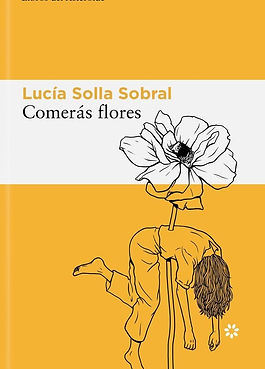
Comerás flores: 345
Solla Sobral, Lucia
Description:
English: Months after her father’s death and fresh out of college, Marina meets Jaime—a man twenty years her senior who bursts into her life, showering her with attention and plans. Before long, her daily routine is turned upside down: she goes from sharing an apartment with her best friend Diana—attending concerts and going out partying—to settling into Jaime’s comfortable apartment and dining at the finest restaurants every weekend. Dazzled by the sophisticated adult life and the charm of Jaime—who also wins over her family—Marina finds herself completely immersed in his world, slowly beginning to forget what once defined her. With prose that oscillates between lyrical delicacy and visceral rawness, *Comerás flores*—the debut novel by Lucía Solla Sobral—explores what it means to be young, to come of age, and to forge an identity. It is a novel about the many faces of love and the mirages of unequal relationships, the struggles of grief, and friendship as a sanctuary.
Español: Meses después de la muerte de su padre y recién graduada, Marina conoce a Jaime, un hombre veinte años mayor que ella que irrumpe en su vida colmándola de atenciones y planes. En poco tiempo, su día a día da un vuelco: pasa de compartir piso con su mejor amiga Diana, de ir a conciertos y de salir de fiesta a instalarse en el cómodo apartamento de Jaime y cenar cada fin de semana en los mejores restaurantes. Deslumbrada por la sofisticada vida adulta y el encanto de Jaime, quien también se gana a su familia, Marina se ve sumergida por completo en su mundo, comenzando a olvidar lo que la definía. Con una prosa que oscila entre la delicadeza lírica y la crudeza visceral, Comerás flores, la novela debut de Lucía Solla Sobral, explora qué significa ser joven, madurar y construirse una identidad. Una novela sobre las distintas caras del amor y los espejismos de las relaciones desiguales, las dificultades del duelo y la amistad como refugio
Why We Recommend It:
English:
This book is recommended for adults who has lost a parent.
Español:
Este libro se recomienda a los adultos que han perdido a un padre.
El invencible verano de Liliana / Liliana's Invincible Summer (Premio Pulitzer) (Spanish Edition)
Rivera Garza, Cristina
Description:
English:
October 18, 2019. Cristina Rivera Garza travels from her home in Texas to Mexico City, in search of an old, unresolved criminal file. “My name is Cristina Rivera Garza,” she writes in her request to the attorney general, “and I am writing to you as a relative of Liliana Rivera Garza, who was murdered on July 16, 1990.” It’s been twenty-nine years. Twenty-nine years, three months, and two days since Liliana was murdered by an abusive ex-boyfriend. Inspired by feminist movements across the world and enraged by the global epidemic of femicide and intimate partner violence, Cristina embarks on a path toward justice. Liliana’s Invincible Summer is the account—and the outcome—of that quest .
In luminous, poetic prose, Rivera Garza tells a singular yet universally resonant story: Liliana is a spirited, wondrously hopeful young woman who tried to survive in a world of increasingly normalized gendered violence. Rivera Garza traces her sister’s history, depicting everything from Liliana’s early romance with a handsome but possessive and short-tempered man to that exhilarating final summer of 1990 when she loved, thought, and traveled more widely and freely than she ever had before.
Using her skills as an acclaimed scholar, novelist, and poet, Rivera Garza collected and curated evidence—handwritten letters, police reports, school notebooks, interviews with Liliana’s loved ones—to document her sister’s life. Through this remarkable and genre-defying memoir, she confronts the trauma of losing her sister and examines how this tragedy continues to shape who she is—and what she fights for—today.
Español:
El 16 de julio de 1990, Liliana Rivera Garza fue víctima de feminicidio. La asesinó su pareja con 20 años. Esta es su historia, contada en voz de su hermana. Una novela que rescata memorias y busca justicia para ella y para todas.
El 16 de julio de 1990, Liliana Rivera Garza, mi hermana, fue víctima de un feminicidio. Era una muchacha de 20 años, estudiante de arquitectura. Tenía años tratando de terminar su relación con un novio de la preparatoria que insistía en no dejarla ir. Unas cuantas semanas antes de la tragedia, Liliana por fin tomó una decisión definitiva: en lo más profundo del invierno había descubierto que en ella, como bien lo había dicho Albert Camus, había un invencible verano. Lo dejaría atrás. Empezaría una nueva vida. Haría una maestría y después un doctorado; viajaría a Londres. La decisión de él fue que ella no tendría una vida sin él.
Hace apenas un año decidí abrir las cajas donde depositamos las pertenencias de mi hermana. Su voz atravesó el tiempo y, como la de tantas mujeres desaparecidas y ultrajadas en México, demandó justicia.
El invencible verano de Liliana es una excavación en la vida de una mujer brillante y audaz que careció, como nosotros mismos, como todos los demás, del lenguaje necesario para identificar, denunciar y luchar contra la violencia sexista y el terrorismo de pareja que caracteriza a tantas relaciones patriarcales. Este libro es para celebrar su paso por la tierra y para decirle que, claro que sí, lo vamos a tirar. Al patriarcado lo vamos a tirar.

Why We Recommend It:
English:
Recommended for ages 18 and up. This book captures the complexities of mourning a loved one as well as the depicting the beauty of the memories we have of the loved ones one has lost. This is a reflective and emotionlly intense book for anyone who has lost a sibling or loved one in a violent way.
Español:
Recomendado para mayores de 18 años. Este libro capta la complejidad del duelo por un ser querido, a la vez que retrata la belleza de los recuerdos que conservamos de aquellos a quienes hemos perdido. Se trata de una obra reflexiva y emocionalmente intensa, ideal para cualquier persona que haya perdido a un hermano o a un ser querido de manera violenta.
Esto no está pasando
Romero, Carmen
Description:
English: A surprising and revealing account in which comedian Carmen Romero recounts her experience of her brother Miguel’s suicide and the ensuing grief.
It is June 2016, and Carmen Romero’s world is crumbling. Miguel—her brother, a professional soldier just twenty-six years old—takes his own life by jumping from the window of the family home while they are watching *The Godfather* together. It all happens so fast—so fast, in fact, that the things which until that moment had made sense suddenly cease to make any sense at all. Carmen feels as though she is living inside a work of fiction: police officers, neighbors, doctors, ambulances, and even her own mother and sister all seem to be participating in the filming of a movie in which no one ever calls out, "Cut!"
Thus begins the story of comedian Carmen Romero, who, in the wake of her brother’s suicide, enters a state of shock. To reconnect with herself, Carmen begins to tentatively explore the dimensions of her sorrow until—quite unexpectedly—humor breaks through. Only then does she realize that the only way to hold on to life is to confront death from a place far removed from taboo, silence, and fear.
Español: Un relato sorprendente y revelador en el que la cómica Carmen Romero narra cómo vivió el suicidio y duelo de su hermano Miguel
Es junio de 2016, y el mundo de Carmen Romero se desmorona. Miguel ―su hermano, de solo veintiséis años, militar de profesión― se quita la vida al saltar por la ventana de la casa familiar mientras ven juntos El Padrino. Todo ocurre muy rápido; tanto que las cosas que hasta entonces tenían sentido dejan de tenerlo. Carmen cree vivir en una ficción: policía, vecinos, médicos, ambulancias y hasta su madre y su hermana participan del rodaje de una película en la que nadie dice: «¡Corten!».
Así comienza el relato de la humorista Carmen Romero, quien, tras el suicidio de su hermano, entra en estado de shock. Para reconectar consigo misma, Carmen comienza a tantear las dimensiones de la tristeza hasta que, de forma inesperada, irrumpe el humor. Solo entonces comprende que la única forma de agarrarse a la vida pasa por afrontar la muerte desde un lugar alejado del tabú, el silencio y el miedo.

Why We Recommend It:
English: In this memoir the author writes about the loss of her brother and her grieving process. This book is recommended for adults who have lost a sibling or has had a loved one who took their own life.
Español: En esta biografía, la autora escribe sobre la pérdida de su hermano y su proceso de duelo. Este libro se recomienda a adultos que han perdido a un hermano o a un ser querido que se quitó la vida.
Invencible: Cómo descubrí mi fuerza a través del amor y la pérdida
Rivera, Chiquis
Description:
English: Bringing her signature warmth, humor, and positivity to the page, Chiquis Rivera picks up where her memoir Forgiveness left off.
Reeling from her mother’s tragic death, Chiquis finds herself at a major crossroads. As a new parent to her younger brother and sister, she struggles to balance her family’s needs with her dreams of becoming a successful singer and entrepreneur.
Stepping out of the shadow of her mother’s legendary career and finding her own identity as a singer is challenging…but navigating unhealthy relationships proves to be even harder.
When she meets and marries the person she believes is the man of her dreams, it seems like life is finally falling into place. But a dark secret unravels their relationship, and Chiquis emerges stronger as a single woman.
In the end, nothing can keep Chiquis down. Her life philosophy says it all: “Either I thrive or I learn.” Filled with life-affirming revelations, Chiquis ultimately shares her greatest gift with her fans—the accessible lessons that have made her unstoppable.
Español: En los meses que siguieron a la trágica muerte de su madre, el mundo de Chiquis Rivera cayó en picada. Después de dejar de lado sus sueños para apoyar la metamorfosis de Jenni Rivera de cantante en ciernes a legendaria “Diva de la Banda”, un desgarrador malentendido impulsó a Jenni a excluir a Chiquis de su testamento y a desterrar a su hija de su vida. Aun abatida y procesando esta peripecia, Chiquis luego se vio sumida en la oscuridad con el fallecimiento prematuro de su madre. Mientras intentaba desesperadamente recoger los pedazos rotos de su vida, también tuvo que sacar fuerzas para volver a criar y cuidar a sus hermanos como hermana, figura materna y amiga. Rendirse no era una opción.
Salir de la sombra de la ilustre carrera de su madre y descubrir su propia identidad como cantante fue un reto en sí mismo...pero navegar sus relaciones malsanas casi la hunde. Cuando Chiquis conoce y se casa con quien cree ser el hombre de sus sueños, parece que por fin todo se empieza a acomodar. Pero un secreto oscuro desmorona su relación, empujándola a recurrir a su resiliencia para emerger como una mujer soltera, chingona y segura de sí misma.
Con la calidez, el humor y la positividad que la caracterizan, Chiquis comparte su cruda e íntima batalla para reconstruirse después de Jenni. También revela los detalles detrás de lo que ocurrió en su matrimonio, dónde se encuentra con respecto al legado de la familia Rivera, cómo pasó de ser una cantante con los nervios de punta y una emprendedora novata a una intérprete ganadora de un Grammy y una próspera empresaria, y qué visualiza para su futuro.
Al final, nada puede detener a Chiquis. Su filosofía de vida lo dice todo: “O gano o aprendo”. Lleno de revelaciones afirmativas, Chiquis comparte su mayor regalo con sus fans: las lecciones inspiradoras y accesibles que la han hecho invencible.

Why We Recommend It:
English: This memoir is recommended to adults who has lost a parent in a tragic and sudden way.
Español: Esta biografía se recomienda a los adultos que han perdido a uno de sus padres de manera trágica y repentina.
Los siguientes
Simón, Pedro
Description:
English: Dying is as difficult as it is inevitable and that holds true for those who survive, too.
The first day I had to wipe my father's backside, I lied to myself, telling myself it was just like when I used to wipe my son’s: "Come on, Carmen, it’s the same thing; go on, Carmen, he’s your father; come on, woman—that man wiped your backside once."
I repeated this to myself like someone about to take a running start to gather the momentum to jump.
"It’s the same thing, Carmen. Just do it."
But no. It isn’t the same thing.
If Pedro Simón were a baker, we would say that the sourdough starter of his novels is family relationships—an ingredient that is seemingly simple and abundant, yet absolutely fundamental to the history of literature.
After winning the Primavera Novel Prize with Los ingratos—a story that has moved tens of thousands of readers—he once again aimed straight for the heart with Los incomprendidos. Before the lump in our throats has even had a chance to subside, the author now offers us his most difficult novel yet—but also his most... *How do family members confront the inevitable decline and death of their elders?*
Español: Morir es tan difícil como inevitable. También para los que sobreviven
El primer día que tuve que limpiarle el culo a mi padre, me mentí diciéndome que era igual que cuando se lo limpiaba a mi hijo: "venga, Carmen, que es lo mismo; va, Carmen, que es tu padre; venga, mujer, que ese hombre te limpió el culo a ti."
Me lo repetía como quien está a punto de correr para darse impulso y saltar.
"Es lo mismo, Carmen. Hazlo ya."
Pero no. No es lo mismo.
Si Pedro Simón fuera un panadero, diríamos que la masa madre de sus novelas son las relaciones familiares. Un ingrediente aparentemente sencillo y abundante pero absolutamente fundamental en la historia de la literatura.
Tras ganar el Premio Primavera de Novela con Los ingratos, una historia que ha conmovido a decenas de miles de lectores, volvió a apuntar al corazón con Los incomprendidos. Sin que se nos haya aflojado el nudo en la garganta, el autor nos ofrece ahora su novela más difícil pero también más ¿cómo se enfrentan los miembros de una familia a la inevitable decadencia y muerte de sus mayores?

Why We Recommend It:
English: This book is recommended for adults who has lost a parent.
Español: Este libro se recomienda a los adultos que han perdido a un padre.
Reliquia
Guasch, Pol
Description:
English: A delicate, understated, and vital book about family bonds, absence, and the act of writing. A radiant elegy.
Ten years after his father’s death, the narrator of this book decides to write about it. With the shadow of suicide denying him the space to grieve, he asks himself: Is it possible to find the words for a farewell that never took place? Thus, this personal and intimate account evolves into a quest to understand how family bonds are forged, what silence condemns us to, and where the truth of a story lies hidden.
Yet writing fails him, and the author turns to the biographies of writers who took their own lives—and to their final notes—in an attempt to reconstruct a possible, tentative goodbye. Only through a polyphonic, choral narrative can he return to the forgotten corners of his own life—those places where memory dissolves into void.
Reliquia thus transforms into a family chronicle that encompasses a meditation on the journey toward writing and the very meaning of creation; a text on death and absence that leads, ultimately, to the most dazzling moments of friendship and love. With a restrained, unsparing style, Pol Guasch has crafted a book that is both delicate and vital: a radiant elegy.
Español: Un libro delicado, sobrio y vital sobre los vínculos familiares, la ausencia y la escritura. Una elegía fulgurante.
Diez años después de la muerte de su padre, el narrador de este libro decide escribirla. Con la sombra del suicidio privándole del duelo, se pregunta: ¿es posible encontrar las palabras de una despedida que no se produjo? Así, este relato personal e íntimo se convierte en una búsqueda para entender cómo se forjan los vínculos familiares, a qué condena el silencio, dónde se esconde la verdad de una historia.
Pero la escritura falla, y el autor recurre a las biografías de escritores que se suicidaron y a sus últimas notas para reconstruir un adiós posible, tentativo. Solo con una narración polifónica y coral podrá volver a los rincones olvidados de la propia vida, allí donde la memoria se vuelve vacío.
Reliquia se transforma, entonces, en una crónica familiar que contiene una reflexión sobre la llegada a la escritura y el sentido de la creación; un texto sobre la muerte y la ausencia que conduce a los momentos más deslumbrantes de la amistad y el amor. Con un estilo contenido, sin rodeos, Pol Guasch ha armado un libro delicado y vital: una elegía fulgurante.

Why We Recommend It:
English: This book is recommended for adults who is grieving a loved one who took their own life.
Español: Este libro se recomienda a los adultos que están de duelo por un ser querido que se quitó la vida.
Lágrimas en H Mart: Una historia de amor, pérdida y cocina coreana (Spanish Edition)
Zauner, Michelle
Description:
English: In this exquisite story of family, food, grief, and endurance, Michelle Zauner proves herself far more than a dazzling singer, songwriter, and guitarist. With humor and heart, she tells of growing up one of the few Asian American kids at her school in Eugene, Oregon; of struggling with her mother's particular, high expectations of her; of a painful adolescence; of treasured months spent in her grandmother's tiny apartment in Seoul, where she and her mother would bond, late at night, over heaping plates of food.
As she grew up, moving to the East Coast for college, finding work in the restaurant industry, and performing gigs with her fledgling band--and meeting the man who would become her husband--her Koreanness began to feel ever more distant, even as she found the life she wanted to live. It was her mother's diagnosis of terminal cancer, when Michelle was twenty-five, that forced a reckoning with her identity and brought her to reclaim the gifts of taste, language, and history her mother had given her.
Vivacious and plainspoken, lyrical and honest, Zauner's voice is as radiantly alive on the page as it is onstage. Rich with intimate anecdotes that will resonate widely, and complete with family photos, Crying in H Mart is a book to cherish, share, and reread.
Español: H Mart es una cadena de supermercados especializada en comida asiática. La H es por han ah reum, una frase en coreano que podría traducirse como ‘un brazo lleno de comestibles’. Mi madre expresaba su amor por medio de la comida. Por muy crítica o cruel que pudiera parecer —no dejaba de presionarme para que colmara sus utópicas expectativas—, yo siempre sentía que su afecto irradiaba de los platos que me preparaba exactamente como a mí me gustaban. Y si bien apenas hablo coreano, cuando estoy en H Mart es como si lo dominara. Acaricio los productos y digo los nombres en voz alta: melón chamoe, danmuji. Recuerdo las chucherías que mi madre me contaba que comía cuando era niña y el empeño que ponía yo en intentar imaginarla a mi edad. Quería que me gustaran todas las cosas que le gustaban a ella, quería ser ella».
La voz de Zauner, enérgica y directa, lírica y sincera, suena tan viva sobre el escenario como en cada una de estas páginas. Lágrimas en H Mart, un libro para disfrutar, compartir y releer, es su exquisito debut como escritora.

Why We Recommend It:
English: This is recommended to adults who are grieving parents or other loved ones who died from a terminal illness.
Español: Esto se recomienda a adultos que están de duelo por padres u otros seres queridos que fallecieron a causa de una enfermedad terminal.
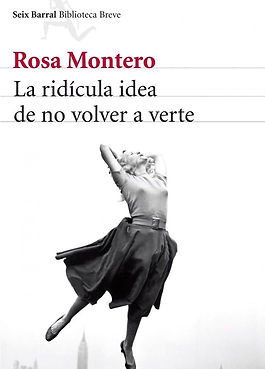
La ridícula idea de no volver a verte
Montero, Rosa
Description:
English: When Rosa Montero read the marvelous diary that Marie Curie began following the death of her husband—and which is included at the end of this book—she felt that the story of this fascinating woman, who defied the conventions of her time, filled her mind with ideas and emotions. La ridícula idea de no volver a verte was born from that blaze of words, from that dizzying whirlwind.
Drawing upon Curie’s extraordinary life story, Rosa Montero constructs a narrative that lies somewhere between personal recollection and collective memory, between an analysis of our own era and intimate reflection. These pages speak of overcoming grief, of the relationships between men and women, of the splendor of sex, of a "good death" and a beautiful life, of science and ignorance, of the saving power of literature, and of the wisdom of those who learn to embrace existence with both fullness and lightness.
Vivid, utterly free-spirited, and original, this unclassifiable book features photographs, reminiscences, friendships, and anecdotes that convey the primal pleasure of listening to good stories. It is an authentic, moving, and intimate text that will captivate you from its very first pages.
Español: Cuando Rosa Montero leyó el maravilloso diario que Marie Curie comenzó tras la muerte de su esposo, y que se incluye al final de este libro, sintió que la historia de esa mujer fascinante que se enfrentó a su época le llenaba la cabeza de ideas y emociones. La ridícula idea de no volver a verte nació de ese incendio de palabras, de ese vertiginoso torbellino.
Al hilo de la extraordinaria trayectoria de Curie, Rosa Montero construye una narración a medio camino entre el recuerdo personal y la memoria de todos, entre el análisis de nuestra época y la evocación íntima. Son páginas que hablan de la superación del dolor, de las relaciones entre hombres y mujeres, del esplendor del sexo, de la buena muerte y de la bella vida, de la ciencia y de la ignorancia, de la fuerza salvadora de la literatura y de la sabiduría de quienes aprenden a disfrutar de la existencia con plenitud y con ligereza.
Vivo, libérrimo y original, este libro inclasificable incluye fotos, remembranzas, amistades y anécdotas que transmiten el primitivo placer de escuchar buenas historias. Un texto auténtico, emocionante y cómplice que te atrapará desde sus primeras páginas.
Why We Recommend It:
English: This title is for anyone who is grieving a spouse.
Español: Este título es para cualquier persona que está de duelo por su esposo/a.